
December 2025 Newsletter
Hello Domestic Abuse Champions,
We welcome our new NIDAS Service Manager Jo Pinkney is joining us and we say farewell to Michelle, who is returning to Suffolk as the IDVA Service Manager – we wish you well Michelle. We are thrilled to have Jo leading the way and I‘m sure you’ll join us in giving her a big welcome to the team.
We hope you are all well. Winter is upon us and the streets slowly light up with Christmas cheer. For some Christmas is full of excitement and celebrations whilst for others it is a time of reflection, memories and sadly, rising domestic abuse statistics.
Thank you to all of you who made the time to join us for our refresher training sessions and learning events this year and for all your hard work spreading awareness and being that listening ear. Also, a big welcome to all our new DA Champions, our network is ever-growing, and we couldn’t be prouder, thank you all.
We look forward to seeing you all in the New Year and we are sending you tidings of Health and Happiness for 2026. For those who celebrate Christmas, may it be merry.
Spotlight on Coercive Control
What is Coercive Control?
Overview
Coercive Control is a form of domestic abuse that strips someone slowly of their freedom and independence.
Described as an act or pattern of acts of assault, threats, humiliation and intimidation, coercive control creates fear, isolation, and dependency for the victim as the perpetrator has removed them from their support networks while controlling the victim’s everyday behaviour and activity.
In 2015, coercive control became a criminal offence in England and Wales under the Serious Crime Act. This law recognises that abuse isn’t always physical, but also emotional, psychological and financial.
What does coercive control look like?
Often, when we think of domestic abuse, we think of ‘violence’ and while coercive control can include violence, often it appears in ways that are harder to detect and can include:
- Having to account for where you are and what you’re doing when away from home
- Making you dress in a certain way
- Monitoring you to see who you’re talking to
- Enforcing rules and regulations with consequences if you don’t follow them
- Making threats against you and/or intimidating you
- Monitoring your devices such as phones, tablets and laptops
- Isolating you from friends and family
- Humiliating you
- Denying you access to basic needs such as food, medical support and clothing of your choice
These are just examples, and it’s important to note that perpetrators – will and do – use many different tactics to control their victims, so if you’re not sure if what you’re experiencing is coercive control, ask yourself:
- Am I fearful being around them?
- Do I feel like I’m constantly walking on eggshells?
- Am I fearful that what I’m wearing or eating will have consequences?
- Do I need to ask their permission, or feel like I should ask their permission if I want to talk to a friend or family member?
- Am I questioning my own judgement?
- If the above feels familiar, then you could be experiencing coercive control.
Why is coercive control so damaging?
Coercive control is a highly manipulative and damaging form of domestic abuse because it can happen so subtly and over a long period of time, leaving the victim often feeling isolated, confused and afraid to ask for help.
It’s important to know that abuse is never the victim’s fault and if you, or someone you know is experiencing it, support is available.
I think I’m experiencing coercive control, what do I do?
If you feel you’re in immediate danger, call the Police on 999.
You can also contact NIDAS and speak to our team who can support you with:
- Tailored and individualised risk and safety planning
- Understanding the criminal justice system
- Advice and guidance in keeping safe
We can support you no matter where you are in Norfolk. Our aim is to listen to you, to guide you and to be by your side. You only have to tell us your story once. Our service will support you, your needs, your journey – your freedom.
As well as calling NIDAS, if you think you’re experiencing coercive control in Norfolk, it’s important to:
- Log all incidences personally e.g. in a notebook with dates, times and what happened
- Log all incidences with the Police either via 101, Online or by visiting a Police station
- If you feel you’re in immediate danger, always call the Police on 999.
https://nidasnorfolk.co.uk/what-is-coercive-control/
Using an Intersectional Lens in Domestic Abuse Work
Domestic Abuse is Never a Standalone Issue
Every survivor’s experience is shaped by the combination of their identities, including ethnicity, gender identity, disability, immigration status, sexual orientation, age, and socio-economic position. These intersecting factors influence how abuse is perpetrated, how it is understood, and how easily someone can seek help
As part of this year’s 16 Days of Action Against Gender-Based Violence, we are highlighting the experiences of marginalised communities. The aim is clear: without an intersectional approach, the people most at risk are often the ones least seen. We were very pleased to offer our NIDAS Conference to so many wonderful Norfolk Domestic Abuse Champions this year. We will also be offering a brand new training ‘Domestic Abuse and Intersectionality’ in 2026
Why Intersectionality Matters
Using an intersectional lens means recognising the factors that shape risk and create barriers to safety. Racism, homophobia, misogyny, transphobia, ableism, language barriers, and distrust of statutory agencies can all intersect with domestic abuse. These barriers can silence victims, delay help-seeking, and increase danger if professionals do not recognise them.
Effective practice relies on adapting our approach, not expecting survivors to fit an inflexible system. This includes asking better questions, challenging assumptions, and tailoring safety planning to someone’s lived reality. Intersectionality is not a specialist topic; it is a core competency for safe and accountable domestic abuse practice.
Practical Tips for Professionals
- Slow down and get curious
Use open questions and avoid assumptions about culture, gender roles, or family dynamics.
- Consider hidden barriers
Think beyond the immediate situation. Factors like racism, disability, immigration status, sexuality, or language needs can significantly affect risk and disclosure.
- Avoid one-size-fits-all responses
Safe options for one person may be unsafe or culturally inappropriate for another. Adapt your approach.
- Challenge structural bias
Check whether your service processes or policies unintentionally exclude certain groups and raise concerns where needed
- Use interpreters appropriately
Only use trained, independent interpreters. Never use friends, relatives, or community members.
- Build trust intentionally
Be transparent about safeguarding and confidentiality. Consistency matters, especially for people who have experienced discrimination from services.
- Link with specialist ‘by and for’ organisations
Their support may be more accessible or culturally relevant for some survivors.
- Reflect on your own practice
Ask yourself who you are not seeing and why. Intersectionality requires continuous learning and honest reflection.
Our Ongoing Commitment
NIDAS is committed to employing intersectional practice. We embed this approach across everything we do, because structural inequalities and discrimination create real barriers for many victims. To support our work with survivors of domestic abuse we have a Specialist IDVA Team who work with Older People, Substance Misuse, Disability, LGBTQ+ individuals, Diverse Communities, Male Victims and those with Unmet Needs. We also have IDVA’s who specialise in Child to Parent Abuse and those who work with Families.
Each area in Norfolk has a team of IDVA’s who work with high and Medium risk Domestic Abuse survivors. NIDAS also are now commissioned to manage Standard risk cases (please see our website to make referrals and seek more information)
NIDAS Conference 2025 – ‘Domestic Abuse and Intersectionality’
This year we had the privilege of hosting our Annual Conference in Wymondham. Around 100 delegates shared the day which, in general, was very well received despite a few technical hitches. We had some wonderful speakers whom we again thank for their generosity as they all offered their services free of charge. A special thanks to;
Dr Mirna Guha from Anglia Ruskin University
Catherine Cooper from SignHealth
Ann Donkin from Age Concern
Richard Gallard from MAP
and last, but not least, presentations from our NIDAS Specialist IDVA Team.
Our Daisy NIDAS Manager opened the day and our new Leeway CEO made a warm closing speech.


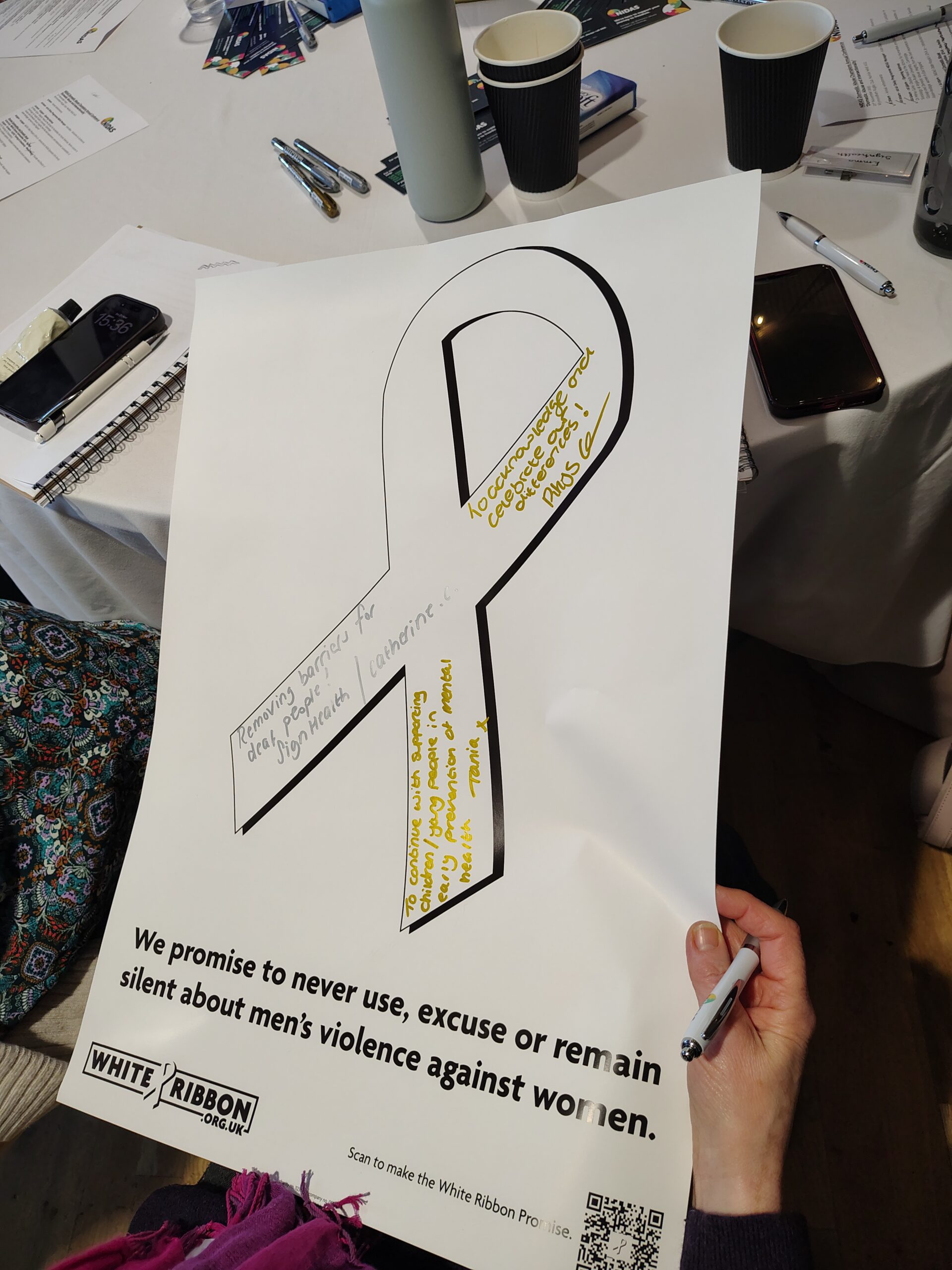
NIDAS welcome delegates to sign White Ribbons as part of 16 Days of Activism Against Gender-Based Abuse.
Domestic Abuse Facts & Figures
Office of National Statistics
Redevelopment of domestic abuse statistics: research update May 2025, Please see link below
Prevalence, long-term trends and types of domestic abuse experienced by people aged 16 years and over, based on findings from the Crime Survey for England and Wales, and police recorded crime.
Domestic abuse prevalence and trends, England and Wales: year ending March 2025
New domestic abuse questions
The questions on domestic abuse are asked as part of the self-completion section of the CSEW. These have largely remained the same since they were introduced in April 2004, allowing for a long, comparable time series. However, there were issues with the data, mainly:
- they did not align with the definition of domestic abuse introduced in the Domestic Abuse Act 2021
- they excluded the offence of controlling or coercive behaviour which was introduced in the Serious Crime Act 2015
- they did not measure the number of incidents or frequency of abuse
- there was a greater user need for data to understand the nature of the abuse
Following extensive testing, as outlined in our Developing a new measure of domestic abuse: April 2023 article, new survey questions to measure domestic abuse were added to the CSEW in April 2023, as part of a split-sample trial until March 2025. Half of respondents were asked the new questions, and the other half were asked the existing questions.
To better align with our understanding of domestic abuse and changes to legislation, the new questions incorporate more abuse types than before and ask about a wider range of abusive behaviours. For example, the new questions include behaviours concerning marital status-related abuse and health abuse, which were not previously covered. Other abuse types were partly reflected in the previous questions (for example, economic abuse) but the new questions include a wider range of abusive behaviours that respondents may identify with.
The new questions are split into two parts. The first part asks questions about intimate partner abuse, while the second part asks questions about family abuse. The questions first collect information on experiences since the age of 16 years. Those who report having experienced abuse, are then asked about their experiences in the last year. Respondents are then asked questions on the impacts of the abusive behaviours experienced since the age of 16 years.
In the intimate partner questions, respondents are asked about abusive behaviours experienced by their current partner, ex-partner(s), or both. Within the family abuse questions, respondents are asked about abusive behaviours experienced from one or more family members aged 16 years or over.
We have also made changes to the way questions are asked and the format in which they are presented. For example, in the new questions, respondents who state they have a current partner and have had an ex-partner are presented with a grid containing two options. This means that they can select whether they have experienced the abusive behaviour by a current partner, ex-partner(s), or both.
More information on the differences between the question sets can be found in our Evaluating a new measure of domestic abuse article.
Following a full evaluation, we made the decision to stop the split-sample trial and include the new domestic abuse questions on the CSEW permanently from April 2025, replacing the existing questions. We could not continue with the split-sample trial because of the impact on the quality of the domestic abuse estimates, as well as the sexual assault and stalking estimates, because all would continue to be affected by reduced sample sizes.
The findings of our full evaluation, including evidence for each of our 12 evaluation criteria, are presented in our Evaluating a new measure of domestic abuse article. A summary of the evidence is provided in this article.
From the new questions, we estimate that, for the survey year ending March 2024, 8.0% of people aged 16 years and over experienced domestic abuse in the last year (equivalent to 3.9 million people). When breaking the figures down by sex, we estimate 9.5% of women (2.3 million) and 6.5% of men (1.5 million) have experienced domestic abuse in the last year.
We estimate 1 in 4 (26.1%) people aged 16 years and over have experienced domestic abuse since the age of 16 years, (equivalent to 12.6 million people). Split by sex, we estimate that 30.3% of women and 21.7% of men have experienced domestic abuse since the age of 16 years (equivalent to 7.4 million and 5.1 million, respectively)
Podcasts and Videos
25 Best Domestic Violence Podcasts to Listen to in 2025 – A collection of Domestic abuse related podcasts.
Best Domestic Abuse Podcasts (2025) – Further recommended podcasts around the topic of Domestic Abuse.
Sector News
16 Days of Activism 2025 – UK SAYS NO MORE – The 16 Days of Activism against Gender-Based Violence is an international campaign that kicks off on 25 November, the International Day for the Elimination of Violence against Women, and runs until 10 December, Human Rights Day.
The campaign was started by activists at the inauguration of the Women’s Global Leadership Institute in 1991. It is used as an organising strategy by individuals and organizations around the world to call for the prevention and elimination of violence against women and girls.
This year’s campaign we’re calling on everyone to help raise awareness and protect families and pets.
College of Policing
Violence against women and girls research reports published
The College of Policing has published three new research reports examining police interventions designed to reduce violence against women and girls (VAWG). The studies, funded by the Cabinet Office Evaluation Accelerator Fund, tested innovative approaches to prevention and response. The three interventions are:
- Forensic marking
- Police officers in classrooms
- Video first response to non-emergency domestic abuse
Police News
Hundreds of victims protected after Metropolitan Police enforces new domestic abuse order scheme
More than a thousand victims across the UK have been protected through tougher restrictions on domestic abusers piloted over the last year.
Domestic Abuse Protection Orders have been trialled by forces, including the Metropolitan Police, since November last year ahead of a planned national rollout.
Respect
Respect celebrates 25th anniversary with parliamentary event
On Tuesday 25th November Respect held a parliamentary event to celebrate 25 years of their work to end domestic abuse. This formed the 1st of the 16 days of activism against gender-based abuse
Ministry of Justice
Government action to protect children from abusive parents
- Government announces plan to repeal presumption of parental involvement from the Children Act 1989
- New evidence shows that always prioritising contact can perpetuate child abuse in the worst cases
- Part of Plan for Change to protect children, standing up for victims and restoring faith in the justice system
https://www.gov.uk/government/news/government-action-to-protect-children-from-abusive-parents
Home Office
Frontline police responses to domestic abuse incidents involving children
7th November 25
The Domestic Abuse Act 2021 acknowledged the devastating impact domestic abuse can have on children and young people (UK Public General Acts, 2021). The Act recognised children who see, hear or experience the effects of domestic abuse as victims of domestic abuse in their own right. Identifying children experiencing domestic abuse is therefore crucial, and police called to a domestic abuse incident can play a critical role in this.
The research reviewed frontline police officer responses to domestic abuse incidents involving children. It aimed to better understand current practice, processes, attitudes and behaviours among responding officers when attending these incidents.
**Please see the full report for the outcomes.
Crown Prosecution Service
Complex layers of abuse provide a new prosecution challenge in tackling Violence Against Women and Girls (VAWG)
A significant overlap in crime types relating to violence against women and girls is a complexity prosecutors are working to overcome as they strive to seek justice for those facing abuse.
Data from the Crown Prosecution Service shows the growing relationship between domestic abuse and other related crimes such as rape, strangulation, revenge porn, stalking and honour-based abuse.
Today (25/11/2025) as the CPS launches its five-year action plan to tackle these crimes – as part of the Government’s ambition to halve violence against women and Girls in a decade – prosecutors have set out the scale of this growing challenge.
Rape Crisis
A record number of rape and sexual offence trials face delays and unacceptable waiting times, new research reveals.
Survivors of rape and other sexual offences are increasingly likely to face longer waiting times and last-minute delays before their case is heard in court, according to a research report released today by Rape Crisis England & Wales (RCEW).
The report, Living in Limbo, is the second one of its kind from RCEW and builds on the latest government data showing that there are now 13,238 sexual offence cases awaiting trial in Crown Court backlogs – a 66% increase since their first report, Breaking Point, was finalised in 2022.
Survivors of adult rape are currently made to wait an average of 499 days before the Crown Court will hear their trial in cases where a defendant has not been remanded. This is 192 days longer than parties will wait in all other offence types.
Southall Black Sisters
https://southallblacksisters.org.uk/submissions-campaigns/invisible-women/
On 31 October 2025, a new campaign launches to confront systemic failures that leave Black, minoritised and migrant (BMM) abuse victims and families unprotected and without justice.
The campaign – Invisible Women – demands accountability, visibility and systemic reform across policing, other statutory agencies, Domestic Abuse Related Death Reviews, inquests and the courts. It confronts institutional racism and discrimination in policing and policy, dismantles intersectional barriers to safety and justice for BMM women, and challenges their erasure in media and public life through family-led testimony, research partnership and strategic public engagement.
Formed in 2023 by Killed Women Co-Founder Jhiselle Feanny with the support of Dr. Hannana Siddiqui OBE of Southall Black Sisters, Invisible Women brings together bereaved families of BMM women killed through domestic abuse and fatal male violence – whether in public spaces or within the home.
The campaign launches with the release of:
- The Report Invisible Women “Made Visible”: Learning from the Femicides of Black, Minoritised and Migrant Women
The Pledge Invisible Women: We Were Here, Where Were You?
UN Women
Rise in Technology-Facilitated Abuse Prompts Sector Concern
Recent reporting highlights a significant increase in digital abuse, including stalkerware, hidden cameras, deepfakes, and online financial harm. These behaviours are becoming more common within domestic abuse cases, reinforcing the need for digital safeguarding within risk assessments and safety plans. Read more here.
Leeway update
Plans for the next two years
NIDAS Spotlight
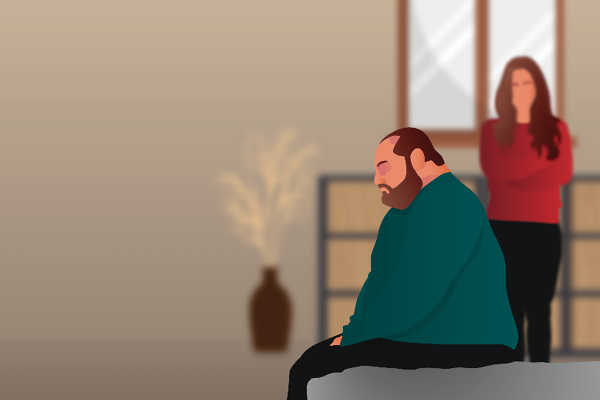
NIDAS has recently focused on Male Victims of Abuse
Training
NIDAS DA Champions Training
Please inform your colleagues of our 2-day Domestic Abuse Initial Training which runs monthly throughout the year and is free.
Norfolk Constabulary Webinar – Multi Agency Risk Assessment Co-ordination (MARAC) – January 26, 2026 @ 2:00 pm – 3:15 pm
Norfolk Constabulary are offering a free session on Monday 26th January at 2pm for DA Champions to learn more about The Multi Agency Risk Assessment Co-ordination (MARAC), which is how local agencies share information about high-risk domestic abuse victims in Norfolk. The MARAC aims to increase the safety, health and wellbeing of victims. It also aims to reduce the risk of serious harm or homicide. The session will provide clarity over local process and an opportunity to ask questions.
External Training
Coercive Control: A decade of learning Tickets, Fri 12 Dec 2025 at 12:00 | Eventbrite – Safer Places
Trauma Informed Training Tickets, Tue 13 Jan 2026 at 09:30 | Eventbrite – Change, Grow, Live
PD&CERN Bitesize Training (B230226) Registration, Mon 23 Feb 2026 at 10:00 | Eventbrite – A short training course for those working with people with complex emotional and relational needs or a diagnosis of personality disorder.
Resources
Warm spaces for those you work with – https://www.warmwelcome.uk/find-a-space
Norfolk Community Advice Network – ‘No Wrong Door’ report https://ncan.co.uk/wp-content/uploads/2025/10/NCAN-Report-2025-vWeb.pdf
We wish you all a very happy and heathy 2026